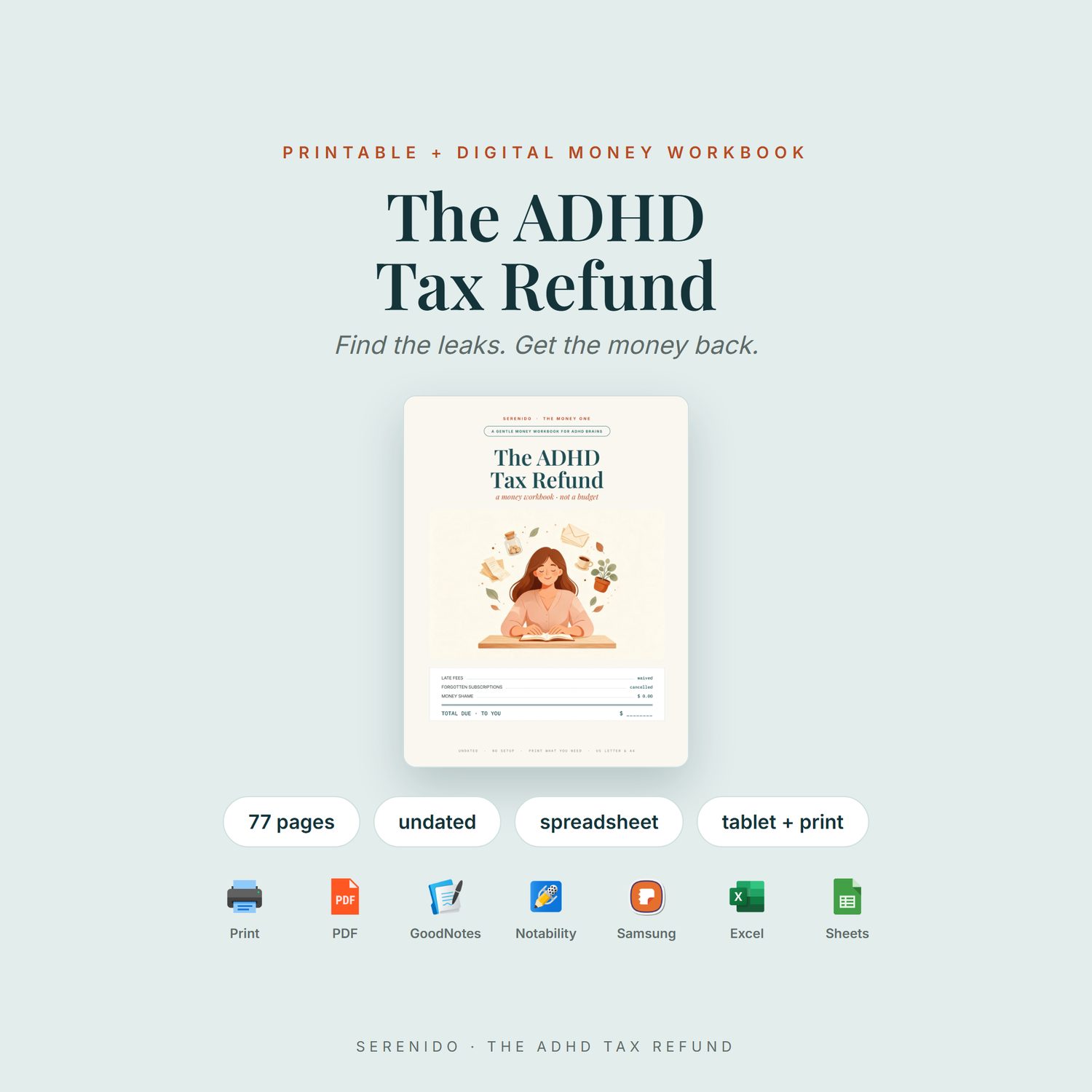
What Is the ADHD Tax? (And How Much It's Really Costing You)
If you have ADHD, you already know the feeling: a late fee you didn't see coming, a subscription you forgot you had, a bag of spinach turning to soup in the crisper drawer. None of these are big on their own. Together, they have a name, the ADHD tax , and it's one of the most talked-about (and least measured) costs of living with a neurodivergent brain.
Where the term comes from
"ADHD tax" isn't a real line item on any government form. It's a term the ADHD community coined to describe the cumulative extra cost of executive dysfunction: the late fees, the impulsive purchases, the duplicate items bought because the first one is "somewhere safe," the gym membership nobody remembered to cancel. Individually, a $12 late fee or a wilted bag of lettuce feels trivial. Add it up across a year, and it stops being trivial.
What actually shows up in the "tax"
- Late fees and interest from bills that got buried, forgotten, or opened three weeks after they arrived
- Forgotten subscriptions, the free trial that quietly became a $14.99/month charge eleven months ago
- Food waste, groceries that go "out of sight, out of mind" in a drawer and get thrown away unused
- Duplicate purchases, buying scissors, tape, or phone chargers again because the first one is filed under "somewhere safe," which is ADHD for "gone forever"
- Impulse purchases made for a dopamine hit rather than an actual need, often regretted within days
- Unreturned items sitting in a trunk or closet past the return window
So how much does it actually cost?
There's no official study putting a precise national number on the ADHD tax, but when people in the community actually total up a year of late fees, forgotten subscriptions, and food waste, the number is rarely small, most people land somewhere between a few hundred and a couple thousand dollars a year. The real value isn't in the exact number; it's in seeing it clearly for the first time, because you can't fix a leak you've never measured.
The fix isn't a stricter budget
Traditional budgeting advice assumes the problem is willpower, spend less, try harder, be more disciplined. That's the wrong diagnosis for an ADHD brain. The actual fix is removing the reliance on memory and willpower in the first place: autopay instead of remembering due dates, a single "landing zone" instead of hoping you'll remember where you put something, a 24-hour rule instead of white-knuckling every purchase decision.
That's the whole idea behind the tools on this site, none of them ask you to be a different person. They just remove the exact spots where ADHD brains predictably lose money.